
The Mistake Most People Make First
The mistake most people make first is assuming the question is simple: tenant broke it, tenant pays; landlord owns the house, landlord pays for everything else. It's tempting because it fits on a napkin and ends the argument fast. Nobody wants to dig out a lease over a garage door spring. But garage doors don't break cleanly into "tenant did it" or "landlord's problem." Most failures sit in a gray zone — normal wear, humidity damage, or a part that was already failing before anyone moved in — and that's exactly where couples (and landlords and tenants) end up arguing.
The Three Categories That Actually Matter
Instead of "who touched it last," it helps to sort garage door issues into three buckets:
- Normal wear and tear — springs that have simply reached the end of their cycle life, rollers worn smooth, cables stretched over years of use. This is usually the landlord's responsibility, the same way a water heater or roof wears out regardless of who's living there.
- Damage from use or neglect — a door knocked off track from backing a car into it, a remote left out in the rain and never replaced, a panel dented by a bike leaned against it. This is usually the tenant's responsibility.
- Maintenance neglect — rust creeping up the bottom panel because nobody ever lubricated the hardware or wiped down the tracks, hinges seizing from built-up grime. This one's debated most, because it depends on who was supposed to be doing upkeep and whether anyone reported the early signs.
That third category is the one that causes real arguments, and it's worth naming out loud in the lease rather than assuming it's obvious.
Why Humidity Changes the Math Here
In this part of Florida, the maintenance category matters more than it would somewhere dry. Constant humidity and afternoon downpours mean steel hardware rusts faster, wood or composite doors can swell and bind in their tracks, and hinges and rollers that aren't occasionally checked seize up well before they would in a drier climate. A tenant who never mentions a slightly sticking door for eight months, only for it to seize completely, has arguably let a small maintenance issue become a bigger repair. A landlord who's never scheduled a tune-up in years has let the same thing happen from the other direction. Documenting condition early is how you avoid pointing fingers later.
What to Actually Inspect at Move-In
A move-in walkthrough that only checks "does the door open and close" misses almost everything that causes disputes later. Go through this list together, in writing, with photos or video and a date attached:
- Springs: Look for visible rust, gaps in the coils, or obvious sagging. Note the condition even if they're currently working.
- Cables and rollers: Check for fraying cables and whether rollers are metal (louder, cheaper) or nylon (quieter, wears differently). Note any flat spots.
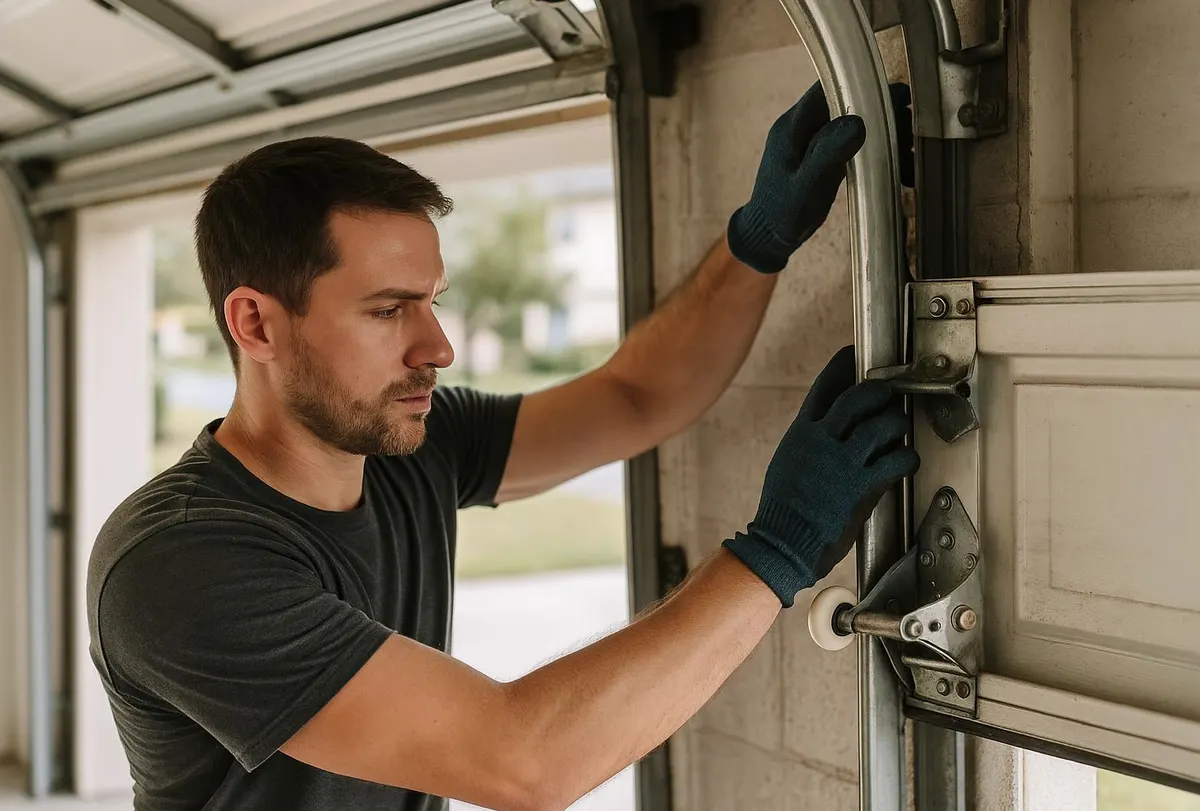
- Track alignment: Stand back and sight down the tracks on both sides — they should run straight and parallel, with no bends or separation from the wall.
- Balance test: With the opener disconnected (pull the release cord), lift the door manually about halfway. It should stay roughly in place. If it slams down or shoots up, the springs are already out of balance.
- Weatherstripping and bottom seal: Check for cracking, gaps, or water staining on the floor beneath it — a sign the seal isn't handling the region's heavy afternoon rain.
- Opener and remotes: Test the wall button, remote, and keypad if there is one, and confirm the auto-reverse safety sensors actually stop the door when something blocks the beam.
- Wind-load rating: If there's a label on the door or in paperwork noting a wind-load rating, note it — it matters for storm season and for any future insurance conversation.
Photograph each item, date the photos, and keep a copy with the lease. This single habit resolves more disputes than any clause ever will.
When to Call Arcadia Overhead Door Co
If a move-in inspection turns up springs that look questionable, a door that's out of balance, or rollers and cables that are clearly near the end of their life, it's worth getting a neutral, written assessment before anyone signs off. We handle garage door maintenance visits that check spring tension, lubricate hardware, and flag early rust or wear before it becomes a bigger repair — useful for a landlord protecting the property or a tenant protecting their security deposit. We also handle off track door repair when a door has already started binding or riding crooked, which is common here once humidity swells a track or warps a panel.
If you're sorting out a garage door dispute, prepping a rental for a new tenant, or just want an honest read on what's original and what's wearing out, call Arcadia Overhead Door Co. We serve Arcadia, Nocatee, Fort Ogden, Lake Suzy, Port Charlotte, Punta Gorda, Wauchula, and Bowling Green, and we'll give you a straight answer in writing.