
You hit the button and the opener groans a little longer than it used to. Maybe the door hesitates halfway up, or it closes crooked, dropping faster on one side than the other. You tell yourself it's nothing — the opener's just getting old. But more often than not, the opener isn't the problem. The door's balance is.
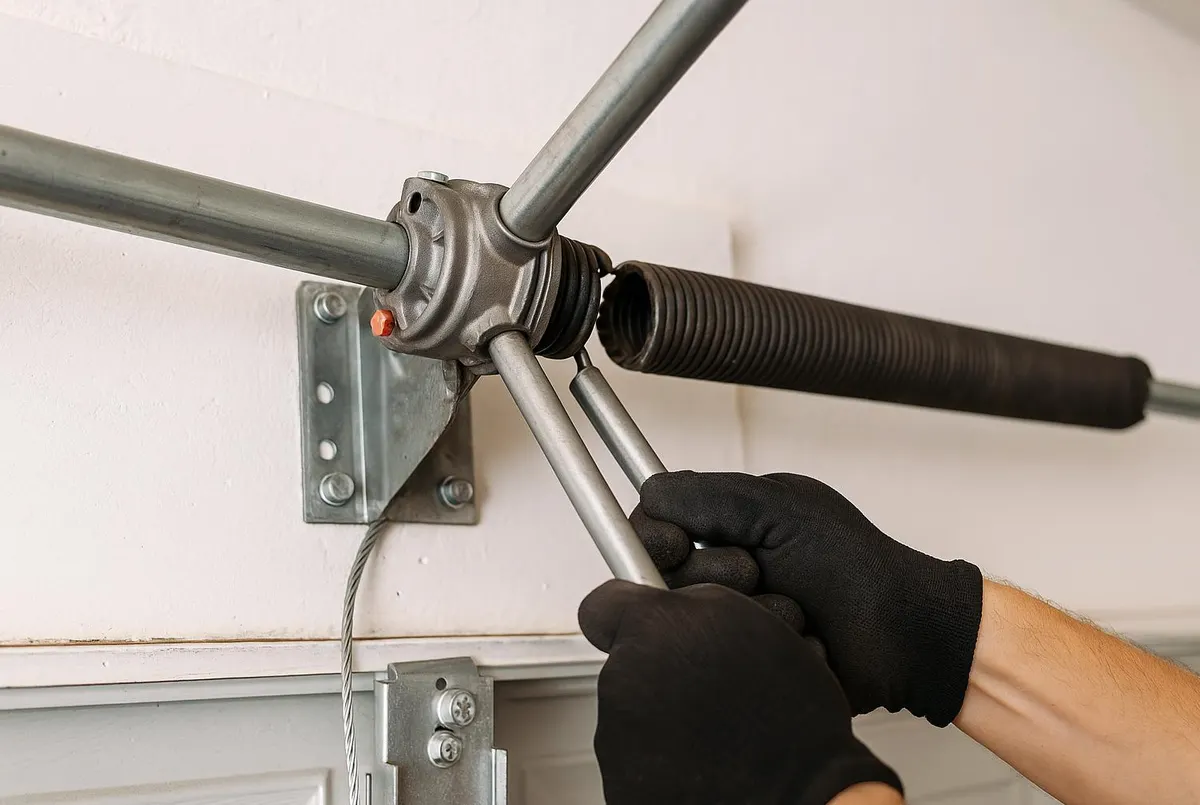
A garage door is supposed to be counterbalanced by its springs so that the opener only has to provide a small push, not do all the lifting. When that balance is off, the opener motor takes on weight it was never built to carry. In a place like DeSoto County, where afternoon humidity and salt-tinged air off the coast work steadily on metal springs and hardware, that imbalance creeps in slowly — a little rust here, a little sag there — until one day the opener is straining and you finally notice.
What an Unbalanced Door Does to Your Opener
The opener's motor and drive gear are sized to nudge a properly balanced door, not hoist dead weight. When springs lose tension or stretch unevenly, the opener compensates every single cycle. Over weeks, that shows up as:
- A motor that runs hotter and louder than it used to
- The travel limit drifting, so the door stops short or reverses unexpectedly
- Premature wear on the drive belt, chain, or gears
- A trolley or carriage that strains audibly at the same point in the door's travel every time
Left alone, this doesn't just shorten the opener's life — it can lead to a sudden spring failure, which is one of the more jarring and genuinely dangerous things that can happen in a garage.
How to Test the Balance Yourself
Tools Needed
- A pair of work gloves
- A stepladder (for taller doors)
- A flashlight
- Someone nearby in case the door moves unexpectedly
Step-by-Step
- Close the door fully. Start from a closed position so you can see the door's full range of motion.
- Disconnect the opener. Pull the red release cord hanging from the trolley. This puts the door in manual mode so the opener isn't doing any of the work during the test.
- Lift the door by hand to about waist height. Use a steady, even pull with both hands.
- Let go and watch what happens. A properly balanced door will stay put, or drift down just slightly. That's the springs doing their job.
- Note any red flags. If the door slams down, that means the springs aren't providing enough lift. If it shoots upward on its own, the springs are over-tensioned. Either way, something's off.
- Repeat at a few heights. Try the same test with the door a quarter open and three-quarters open. A door can be balanced at one height and noticeably off at another, especially if the track has shifted or one spring is more worn than the other.
- Check for binding or drag. As you move the door, feel for spots where it sticks, scrapes, or requires extra effort. This often points to track misalignment rather than the springs themselves — something worth noting since humidity and moisture swelling around the door frame can nudge tracks out of true over time.
- Reconnect the opener once you're done by pulling the release cord again until it locks back into the trolley.
What You Can Handle vs. What Needs a Technician
Running the balance test, watching for the door's behavior, and listening for opener strain — that's all safe homeowner territory. Tightening loose screws on brackets or hinges you can reach from the ground is fine too.
What's not a DIY job: adjusting or replacing the springs themselves. Garage door springs, especially torsion springs, are under enormous tension and have caused serious injuries to homeowners who tried to wind or unwind them without the right bars and training. If your test shows the door is out of balance, that's the line where it's time to call someone, not reach for a wrench.
When to Call Arcadia Overhead Door Co
If your door failed the balance test, or the opener has been straining for a while now, it's worth having it looked at before a spring lets go on its own. Our Garage Door Spring Repair service covers exactly this — replacing worn or mismatched springs and re-tensioning the system so the opener goes back to doing a light job instead of a heavy one. If the test also turned up sticking or binding, we'll check that during a Garage Door Maintenance visit, which covers track alignment, rollers, and cables in the same trip.
If your garage door in Arcadia, Nocatee, Lake Suzy, or anywhere else in DeSoto County is giving the opener a workout it shouldn't have, give Arcadia Overhead Door Co a call. We'll get it balanced, quiet, and back to doing its job right.