
The storm knocks the power out, you grab your keys to move the car before the next band of rain hits, and you hit the wall button. Nothing. The opener light doesn't even flicker. Your car is sitting behind a door that suddenly feels like it weighs a thousand pounds, and the rain isn't waiting for the power company.
Every garage door opener built in the last few decades has a manual release for exactly this moment. Knowing how to use it — and how to put things back together correctly once the lights come back on — can save you a stranded car and a service call.
What You'll Need
- A flashlight or headlamp (outages often mean no overhead garage light either)
- A step stool if you can't comfortably reach the release cord
- Work gloves (optional, but helpful if the door or track has any rust from humidity)
- A pair of locking pliers or a sturdy clamp, only if you need to prop the door open
Step-by-Step: Opening the Door Manually
- Make sure the opener is switched off or unplugged. If power is out, it already is. If you're doing this because the opener itself has failed but power is fine, cut the power at the wall switch or breaker first so the motor doesn't engage while you're working.
- Find the manual release cord. It's usually a red handle hanging from a track that runs along the ceiling, connected to the trolley that rides the opener's rail.
- Pull the cord down and toward the motor unit. This disconnects the trolley from the drive chain or belt, which means the opener is no longer holding the door in place — the springs are now doing all the work.
- Lift the door by hand, using both sides evenly. Grip the bottom bar, not the panels, and lift in one smooth motion. A properly balanced door should feel light and move with minimal effort once it clears the first foot or so.
- If you need the door open for a few minutes, clamp a pair of locking pliers onto the track just below one of the rollers, on both sides, so the door can't roll back down while you're loading the car.
- To close it again, lower slowly with both hands and guide it down rather than letting it drop. Letting a door free-fall stresses the cables and can bend the bottom bracket.
What the Door's Weight Tells You
While you're lifting, pay attention to how the door behaves. It should rise with steady, even resistance and more or less stay in place if you let go halfway up. If it feels like a dead weight, shoots upward on its own, or sags unevenly on one side, that's a spring or cable problem, not a power problem — and it's not something to force. A broken torsion spring under manual lift can cause the door to drop suddenly, which is a real injury risk.
Re-Engaging the Opener Once Power Is Back
- Close the door fully by hand first. The trolley needs to be reconnected while the door is in the closed position so the opener's travel limits stay accurate.
- Pull the release cord again, or push the trolley back toward the door along the rail, until you hear or feel it click into the carriage. Most systems have an arm that locks back into place.
- Restore power to the opener at the breaker or wall switch.
- Test it with the wall button, not the remote, the first time. Watch the full cycle: the door should open and close smoothly, reverse if it meets resistance, and seal tight against the floor when closed.
- Reset the remotes if needed. A power interruption occasionally clears the opener's memory; check your opener's manual for the programming button sequence if your remote stops responding.
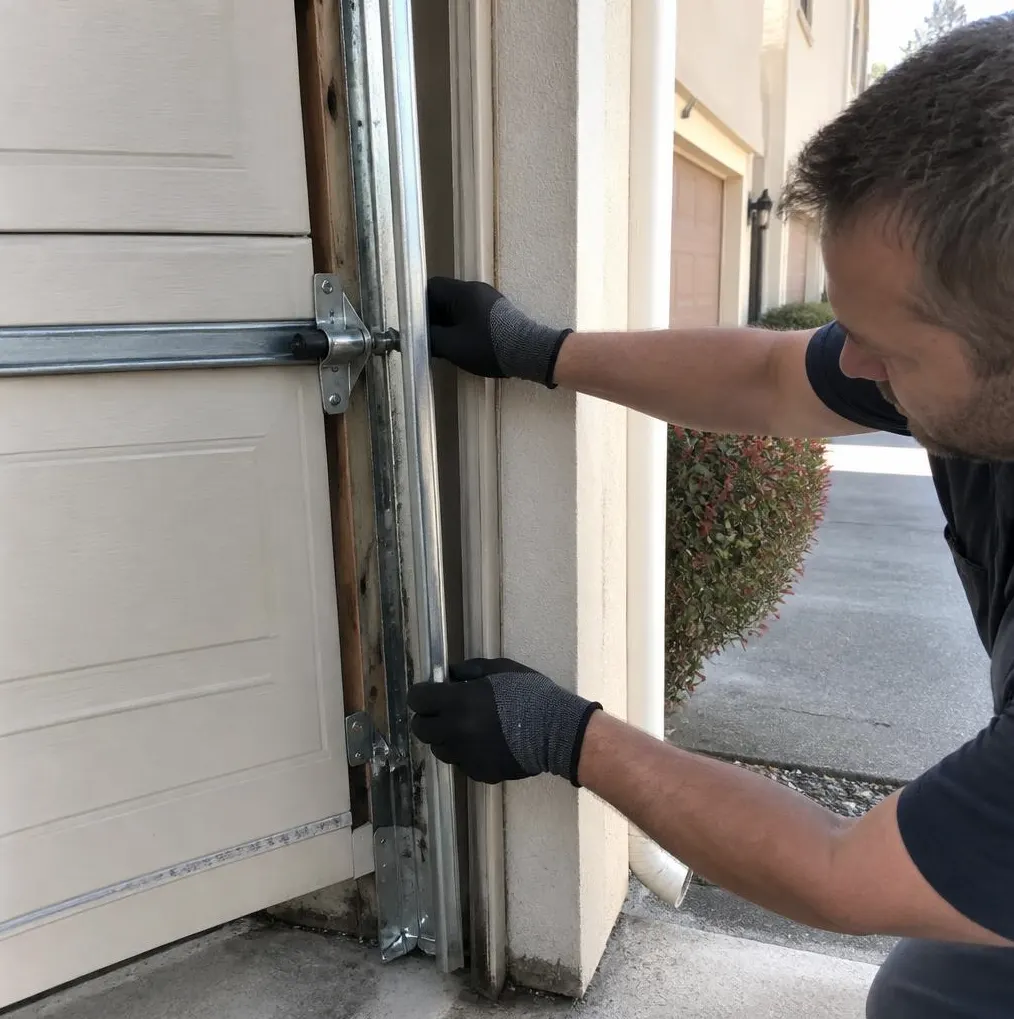
After any outage that lasted more than a few hours, it's also worth checking that the door still latches flush with the weather seal at the bottom. Humidity swings common in this part of Florida can swell wood-framed openings slightly, and a door that closed perfectly in spring can bind or gap a bit by late summer.
What a Homeowner Can Handle vs. What Needs a Technician
Disconnecting the release cord, manually lifting and lowering the door, and reconnecting the trolley afterward are all safe, normal homeowner tasks. What's not: adjusting torsion springs, replacing frayed cables, realigning a door that's come off its tracks, or diagnosing an opener that won't reconnect electronically even after a manual reset. Those involve components under heavy tension or wiring that can fail in ways that aren't obvious until something breaks further.
When to Call Arcadia Overhead Door Co
If the door felt unusually heavy, uneven, or like it wanted to slam shut during your manual test, don't keep using it that way — that's a sign of spring fatigue, which only gets worse and tends to fail completely without warning. We handle garage door spring repair for exactly this situation, along with off track door repair if the panels shifted during the manual lift or a storm gust caught the door while it was disengaged. If your opener won't reconnect properly after power returns, that's worth a diagnostic visit rather than repeated resets.
If you're anywhere in Arcadia, Nocatee, Fort Ogden, Lake Suzy, Port Charlotte, Punta Gorda, Wauchula, or Bowling Green and your garage door isn't behaving the way it should after an outage or a storm, call Arcadia Overhead Door Co. We'll come take a look, get it running safely, and make sure it's ready for the next one.